
The Centre should privatise all public sector banks (PSBs), except the State Bank of India (SBI). This is because private banks have emerged as a credible alternative to PSBs with substantial market share. Also, government ownership hinders the ability of the Reserve Bank of India (RBI) to regulate the sector, according to a report by the National Council of Applied Economic Research (NCAER).

The Insurance Regulatory and Development Authority of India (IRDAI) is considering a proposal to make insurance frauds a parameter for calculating credit scores in an attempt to put a lid on the increase in such activity. The proposal, which is a part of the recommendations made by a working group formed by Irdai and the General Insurance Council, suggests that insurance frauds should feature when the risk profiles of individuals are evaluated and should be used to calculate their credit scores. A poor credit score can deprive a person of financial services such as loans and credit cards, and deter him from indulging in fraud.
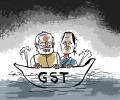
Agra has long been known for the Taj Mahal, but it is also a manufacturing hub filled with micro, small and medium enterprises (MSMEs) that make everything from electronic components to metal products, from paints and chemicals to footwear. And five years after the introduction of the Goods and Services Tax (GST), the MSMEs here complain that while the indirect tax regime has been transformative, cutting out the need to file multiple taxes, its biggest drawback has been the delay in credit refunds. Whoever you speak to - MSME owners, tax lawyers, or industry bodies like the National Chambers of Industries and Commerce (NCIC), Agra Footwear Manufacturers and Exporters Chamber (AFMEC) and Agra Shoe Manufacturers Association (ASMA) - they all emphasise that the GST continues to face some key challenges.

Department of financial services secretary Sanjay Malhotra held a meeting with heads of PSBs, insurance companies and financial institutions for identifying ways to support Agniveers on completion of their tenure of duty.

Union finance secretary T V Somanathan recently said the Centre had saved Rs 10,000 crore in FY22 on interest payments after adopting new accounting mechanisms for central government agencies and centrally sponsored schemes (CSS) for state governments. Speaking at an event, Somanathan said due to these, there was an unspent balance of Rs 1.2 trillion with state agencies from CSS as on March 31, 2022. This means this amount will be reduced from the Centre's borrowing for now and it can be considered a short-term saving for the exchequer.

Prime Minister Narendra Modi and chief ministers of states may soon have an in-person interaction on a common platform for the first time since 2019. The seventh meeting of the Governing Council of NITI Aayog is likely to be held in late June or early July, Business Standard has learnt from sources in the Centre and a state. While the date and other details are yet to be finalised, it is learnt that there will be a conclave of chief secretaries of states and Union Territories in Dharamshala, Himachal Pradesh, on June 14 and 15, which will decide the agenda of the Council meeting to be held at a later date.

The Centre is looking to continue maintaining an arms length in financial sector appointments.

The Centre has increased the premium rates for its flagship insurance schemes, Pradhan Mantri Jeevan Jyoti Bima Yojana (PMJJBY) and Pradhan Mantri Suraksha Bima Yojana (PMSBY), for the first time in seven years due to "long-standing adverse claims experience", and to make them economically viable. The premium for PMJJBY would increase from Rs 330 to Rs 436 a year effective June 1, and the PMSBY premium would rise from Rs 12 to Rs 20, the Ministry of Finance said in a statement. PMJJBY provides life insurance cover worth Rs 2 lakh to all account holders aged 18-50 years.

Some states are taking a legal view on the state GST rate and the compensation rules ahead of the Goods and Services Tax (GST) Council meeting, which is likely to be held in mid-June, said people in the know. While the agenda is still being finalised, several states are likely to take up the matter related to GST compensation and may pitch for its continuation beyond the June 30 deadline. States would like to know how they would divide the compensation collected after June 2022 for payment of principal and interest of compensation shortfall borrowing and arrears to states, sources said.

Five cities -- Delhi, Bengaluru, Kolkata, Hyderabad and Surat -- ceded their power of procurement and agreed to a different procurement model to operate state-run buses.
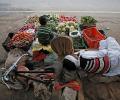
India's inflation trajectory in the coming months will be influenced more by the geo-political situation due to the war in Europe and its impact on supply chains and commodity prices. However, the country is better placed than most to "weather the storm" and achieve growth of close to 8 per cent in the current fiscal year, the finance ministry said in its latest monthly economic report on Thursday. "Through the channel of imports, elevated global crude and edible oil prices now have a significant impact on India's inflation outlook. "Government measures to keep the prices of these commodities in check, along with the recent hike in policy rates by the RBI, are expected to temper inflationary pressures in the economy," the monthly economic report for April, drafted by the finance ministry's economic division, said.

The number of times public sector undertakings (PSUs) have held conference calls with investors, their capital management, and debt financing are among the parameters that the Centre will use to judge their performance for the first time, a senior official in the know said. The government will evaluate PSUs for FY22 based on new parameters that were finalised by the Department of Public Enterprises (DPE) in consultation with the Department of Investment and Public Asset Management (DIPAM) last year, the official said. The government had included more conditions in the memorandum of understandings (MoUs) - used to set annual targets - that public sector enterprises sign with the DPE every year. These included a consistent dividend policy, which seeks to transfer dividends by PSUs every quarter; and market capitalisation or share price improvement over the sectoral index on an annual average basis for listed companies.

'Top lines will grow, volume growth will be there, but margins might also be impacted.'
Global investors have cited the ongoing war and high valuations of Indian equity markets as a reason to skip the IPO.

The International Monetary Fund (IMF), in its latest World Economic Outlook report, has slashed its forecast for India's FY23 gross domestic product growth to 8.2 per cent from 9 per cent, saying that higher commodity prices will weigh on private consumption and investment. This was one of the steepest cuts for emerging economies compared to the IMF's January WEO forecasts. Saying that global economic prospects have worsened significantly due to commodity price volatility and disruption of supply chains caused by the war in Europe, IMF cut its global growth outlook for calendar year 2022 to 3.6 per cent from 4.4 per cent, and said both Russia and Ukraine could experience large GDP contractions.

For the initial public offering (IPO) of the Life Insurance Corporation of India (LIC), the Centre has shortlisted 50-60 anchor investors, which include BlackRock, Sands Capital, Fidelity Investments, Standard Life, and JP Morgan, and will soon finalise its anchor book. The feedback from anchor investors has led to price discovery in LIC shares, valuing India's largest insurer at around Rs 7 trillion, said an official aware of the development. The "attractive valuation" is seen widening the investor base by providing an opportunity to more of them to participate in the IPO, the official added.

The Centre is unlikely to reduce its shareholding in Life Insurance Corporation of India (LIC) for at least 2 years following the insurer's listing because such a move could affect returns for investors participating in the mega initial public offering (IPO). The government's stance was communicated to prospective investors during roadshows after many of them sought clarity on the Centre's plan for lowering its shareholding in the insurer to meet the minimum public shareholding norms. To this, the Centre maintained its stand that it would not look at any equity dilution in the insurer for at least two years to avoid downward pressure on LIC's shares.

The Centre has completed asset monetisation worth Rs 96,000 crore during FY22, surpassing the target of Rs 88,000 crore. For FY23, it has set itself a goal of Rs 1.62 trillion, and already has a pipeline of assets worth Rs 1.6 trillion under advanced stages of implementation, an official said. Union Finance Minister Nirmala Sitharaman on Tuesday reviewed the progress made by several ministries and nudged departments to achieve the targets set for them, the official added.
The Centre's decision to not reduce the face value of shares of India's Crown Jewel - Life Insurance Corporation (LIC) - was taken to make shareholders feel they are acquiring something 'precious'. The face value of LIC's shares was retained at Rs 10, quoted in the draft prospectus, as it would also align the insurer's shares with those of its private sector peers. Even as the LIC Act was amended to "consolidate or reduce the nominal or face value of the shares", with the Centre's approval, it was decided to stick to the current face value of shares at Rs 10 without splitting the existing 6.32 billion shares.

Taking advantage of a Russian offer to sell its crude oil cheap and bear the cost of insurance and transportation, India may import as much as 2 million tonnes (mt), or roughly 15 million barrels of crude, from the sanctioned nation in 2022, Business Standard has learnt. This comes after reports that Indian Oil Corporation (IOC) bought 3 million barrels of Russian Urals from trader Vitol for May delivery. This will be on cost, insurance and freight (CIF) model, where the seller incurs the costs and pays the freight, including insurance charges.
 © 2025 Rediff.com - Investor Information - Advertise with us - Disclaimer - Privacy Policy - Sitemap - Feedback - About us - Terms of use - Grievances